Every hospitality show has a counter-current. At BDNY 2026, against the shine of metallic walls and the scale of printed murals, the quieter booths were drawing a different crowd — designers running their hands over walls. Natural substrates are back in the specification conversation, and this time they are being printed on.
Texture you can feel from a metre away
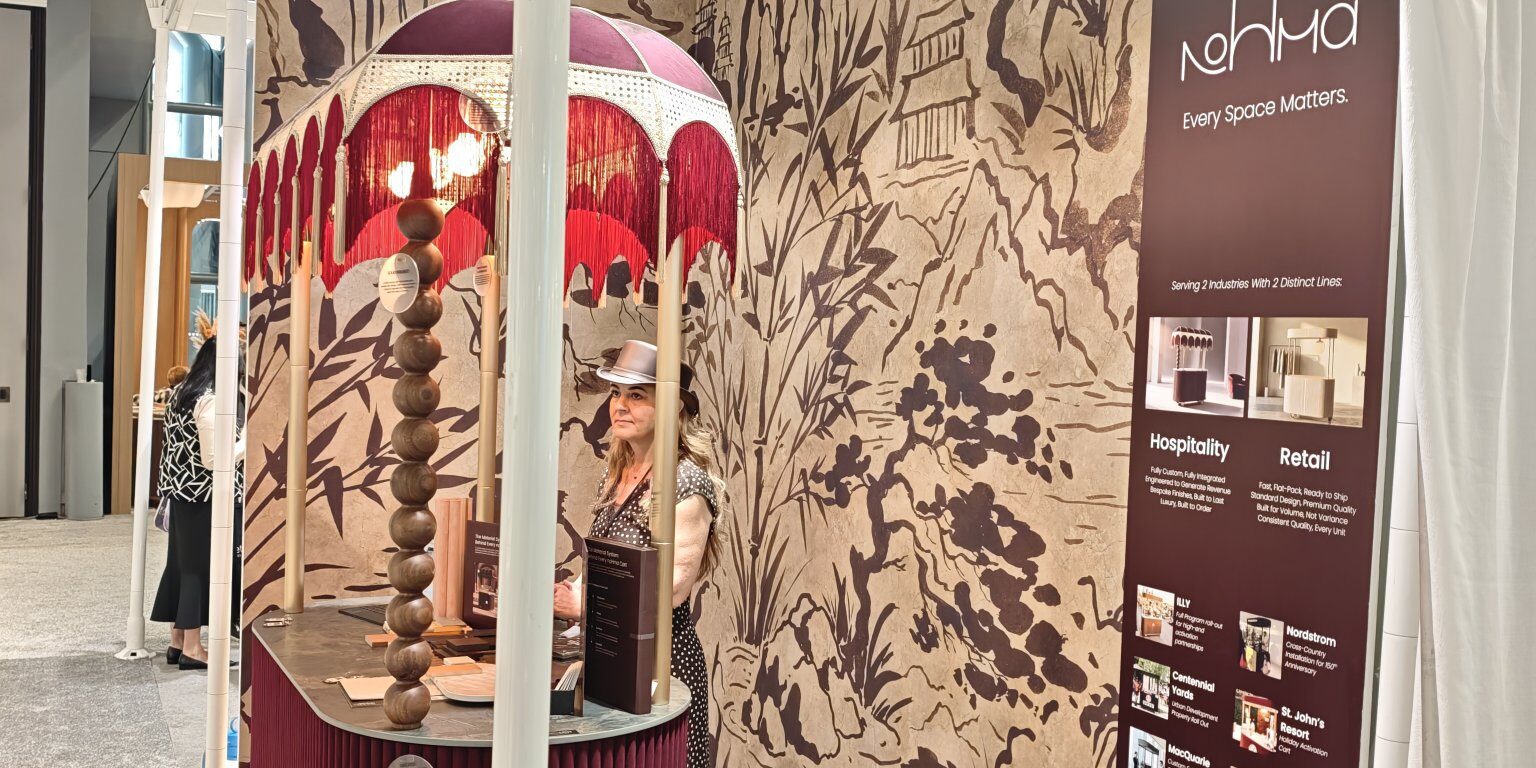
The clearest example was at the Nohma booth (#1032): a chinoiserie-style landscape — bamboo, rockwork, a small pavilion — printed in deep brown ink over a warm, visibly textured natural ground. From across the aisle it reads as art. From one step away it reads as material: the grain of the ground shows through the ink, and no two square metres carry the light in quite the same way.
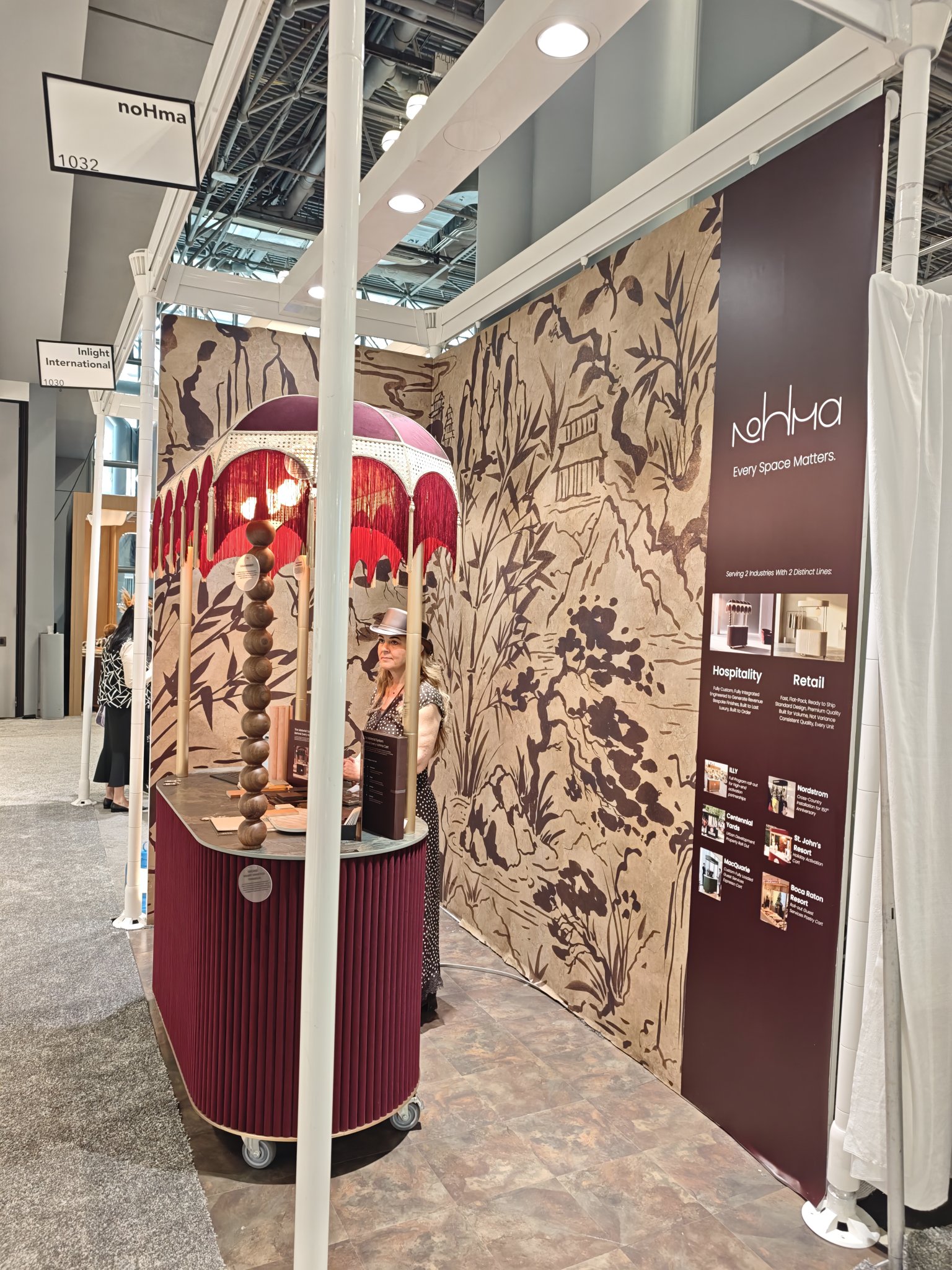
That layered effect is the whole point of a natural substrate. A digital print can imitate cork, grasscloth or wood grain on a smooth vinyl — and from a photograph, the imitation can look convincing. In the room, it fails the hand test and the raking-light test. Specifiers for boutique hotels, spas, wellness spaces and high-end residential projects know the difference, which is why real natural grounds — cork above all — keep their place in the market.
Where cork and natural grounds get specified
The projects that ask for natural substrates are consistent:
- Boutique and lifestyle hotels that sell a sense of place — the wall itself carries the local, organic story of the property.
- Spas, wellness and clinic spaces, where a synthetic sheen works against the concept and a matte, tactile surface supports it.
- Reception and lounge feature walls, where one natural wall warms a space that stone and glass have made cold.
- Premium residential, where designers use cork and grasscloth-type grounds as the quiet background that makes furniture and art look expensive.
Cork brings two functional arguments on top of the aesthetic one: it softens sound in hard-surfaced rooms, and it is a renewable bark material — a sustainability line that hotel groups increasingly ask their suppliers to support with facts, not adjectives.
Printing on a natural ground is a different discipline
For printers moving from smooth vinyl media to natural substrates, four things change:
- The ground is part of the artwork. Ink sits differently on cork and woven natural fibres — colours soften, fine lines lose their hard edge. Artwork that sings on white vinyl can turn muddy. Design for the ground: stronger shapes, warmer palettes, less micro-detail.
- Expect variation — and sell it. Panel-to-panel tone shift is inherent to natural materials. Set the expectation with the designer before printing, agree the acceptable range on a physical sample, and the variation becomes the product’s signature rather than a claim.
- Seams and edges need a plan. Textured natural grounds are less forgiving of misalignment than smooth media. Experienced installers and a honest conversation about pattern repeat save the project.
- Test with your own inks. Absorption varies by ground and batch. A short test run on the actual substrate is not optional — it is the quotation.
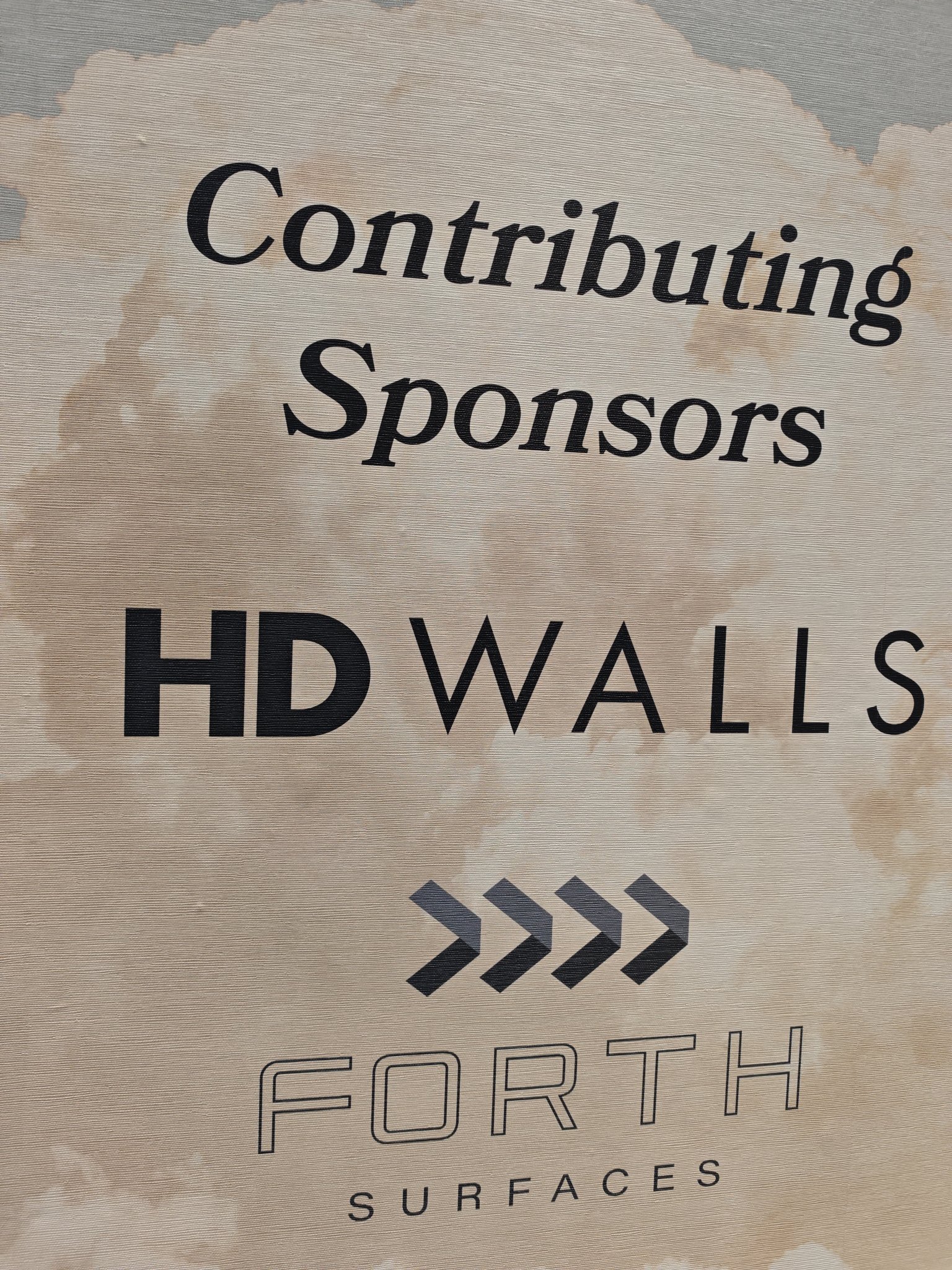
A detail from the show floor makes the same point about texture generally: even the printed sponsor wall at BDNY carried a fine woven grain — at close range, surface texture is what separates a wall that photographs well from a wall that feels finished.
The takeaway for buyers
Natural substrates are not competing with Type II vinyl on durability, and they are not trying to. They occupy the opposite corner of the specification: lower traffic, higher touch, priced on material honesty rather than on performance class. For printers and distributors, the opportunity is a category where the substrate itself is the design — and where a supplier who understands grounds, variation and test-printing is worth more than the lowest price per metre.
If you are developing a natural-ground line for hospitality or premium residential projects, talk to us about samples and test printing for your market: contact the Bauhinia team and tell us the ground and the application you have in mind.
Photos from BDNY 2026, New York, by Bauhinia Walls. Exhibitor displays are shown as market references; they are not Bauhinia products.